
What is vintage and the vintage zeitgeist?
What is vintage? People often ask this question and there’s no straight forward answer. This is because vintage is something unique to each of us. There are, however, some shared opinions and general rules of thumb. We’ll explore some of the different viewpoints from vintage-lovers and some common understandings to help you to find your own true meaning of vintage. Furthermore, we will discover that vintage means more than used, what age people generally consider vintage to be and what the difference is between antiques and vintage.
We will discover the value of vintage and why shabby chic and upcycling are also part of the vintage scene. So let’s dive into the vintage zeitgeist (spirit of the times) together, starting with the age of vintage.
What age is vintage?
First of all, we use the term ‘vintage’ to indicate one or more periods of time, usually from the 20th century. This may be an era, or a particular decade. Vintage eras tend to be the Art Deco period and Mid-Century Modern. We also use ‘vintage’ as an indication of the approximate age of things made in the past. A general rule of thumb for the age of vintage is:
- Anything that is 100 years old or more is antique, simple as!
- Anything that is at least 20 years old, but not old enough to be antique is vintage, of a sort!
Items must be at least 20 years old to be listed as vintage on Etsy (the vintage and hand-made platform) . Etsy does not differentiate between vintage and antique. eBay, on the other hand, has an antiques category but not one that is specific to vintage. eBay does not appear to give any guidelines on the minimum age a piece must be to be listed in the antiques category. Also, sellers may use the term vintage at their own discretion in their listings for used items regardless of its actual age. This may cause some confusion around defining or understanding what age vintage is.
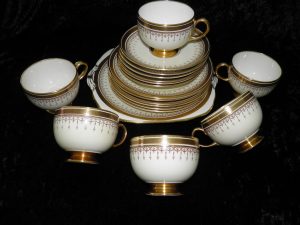
In a nut shell (at the time of this post) vintage is anything made before 2004 and after 1924. Anything made before 1924 is antique. But let’s see what lovers of vintage say.
How vintage-lovers define vintage
As I had reported in one of my published research studies with one of my students, even a decade ago, most vintage-lovers associated the 1920s with antique and many also viewed the 1930s as being antique too. However, there were many others who classed both the 20s and 30s as being vintage.
Whereas the 1940s, 50s and 60s were most definitely regarded as being the key vintage periods, with the 1970s wavering on the edge of being vintage and retro. Some also viewed the 60s, and even the 90s, as being retro. For others, the 1990s, along with the 2000s, is simply out-of-date.
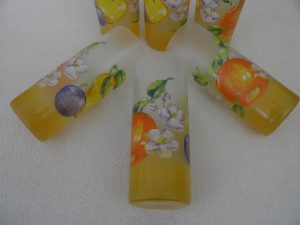
Interestingly, we found that the age of the person had a strong bearing on how they defined the age of vintage, antique, retro and out-of-date. We can therefore say that aging vintage is personal to each of us. I view the 1920s through to the end of the 1970s as being vintage and later decades as being dated. Retro, for me, relates more to reproductions of products from past periods rather than a description for the age of authentic products of any particular time period.
In actual fact, while there is a rule of thumb (as given earlier), we found that there are far more important attributes that helps to determine the appeal and characteristics of vintage, rather than it being defined simply by age. And it is those characteristics that are the essence of the vintage zeitgeist (the spirit of the times).
To understand the vintage zeitgeist, let’s take a look at some of the characteristics of vintage.
Does vintage mean used?
Again, this is a common question.
We now know that vintage is not just about age.
Vintage items do not need to have been used.
However, previous use does have a bearing on condition and rarity, which are two important characteristics of vintage that adds to their appeal. These characteristics also effect what a vintage piece is worth in the second-hand marketplace, in other words, it’s value.
We should also note that the value of an object is not just about its monetary value (what it would cost us to buy), but also how we evaluate its worth to us, how much we want it in our home and how it fits our lifestyle. This is to do with our preferences (emotional value) and our personal choice to buy vintage. Probably the most important thing for us to think about when buying vintage is condition.
A lesson from the world of antiques
There is a general opinion when buying antiques that we can consider for vintage. This is as follows:
When buying antiques, buy the best that you can afford and never buy damaged pieces.
I should say that, as antique items become more rare, damaged pieces may be the only option available to us to own a particular piece. For this reason, damaged antiques are becoming more acceptable to us to buy. Remember that antiques are more likely to be bought for the purpose of ownership and are likely to be part of a collection. What is an acceptable condition is then a personal decision.
Vintage pieces, on the other hand, tend to be bought to be used and should be in a good usable condition. Some like their vintage pieces to show signs of wear because they feel that this adds character to the aesthetic and gives an authentic look. Others prefer vintage pieces that are in excellent condition and that may also suggest that the piece has not been used. Condition then can be a matter of personal acceptance. It really depends on the item, its intended use and your preferred aesthetic, plus how much you are prepared to pay.
So, are you looking for the best piece that you can afford or are you looking for a fair price for a piece that you can use. It’s really your choice.
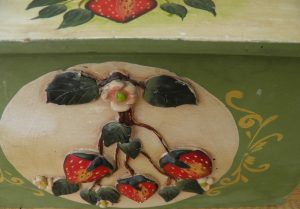
Is vintage ever unused and is it worth more than used vintage?
First of all, it’s not unusual for people to have bought or acquired homeware that they have never actually used. During the first half of the 20th century in particular, people would often keep pieces for best, which were often acquired as gifts. High quality tea ware and dinner services are good examples. Also, some items may have been bought as collector’s pieces that have only ever been carefully displayed in cabinets. When such unused, or little used items become available in the second-hand marketplace they are likely to still be in pristine condition. For this reason, they can command higher prices than pieces with obvious wear. Items may have been kept in their original boxes and packaging for many reasons. This can also make those items an even more attractive investment, but not always so.
Let us look at an example
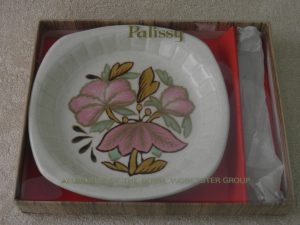
Let’s take the Palissy butter or jam dish and knife in the image below. The design is typically 1970s vintage. The backstamp dates the piece to no earlier than 1976 when the Royal Worcester Group mark was first printed alongside the Palissy name. Currently, without the original packaging you might expect to pay around £7 for the butter dish, may be £8 or £9 with its knife. With packaging, expect to pay around £10 to £12. So not a great deal of difference with this example.
And why might this be?
Well, it’s a nice piece but not necessarily collectible, even with its original packaging. We tend to use covered butter dishes now rather than a butter plate. Therefore, as a practical item, it doesn’t lend itself so well to daily use today. It would however make a nice addition to a party or buffet table, or to use for your cheese and crackers snack!
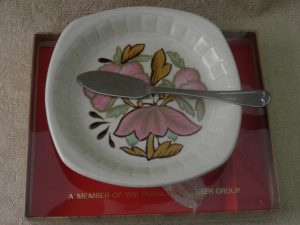
Having the original packaging would suggest that it has probably had limited use in the past which may make it more appealing for some, but it’s simply not all that rare, even with its original box. While the packaging can authenticate a piece, rarity is an important value characteristic for collectible pieces and useability is important for items intended to be reused.
How you use vintage
So, the question to ask yourself is, do you want to use your vintage finds or simply to collect them?
If you plan to use your vintage, then previously used and unboxed pieces may very likely suit your needs better. Afterall, you may feel somewhat obliged to have to keep your vintage piece boxed for posterity instead of enjoying using it!
Remember, most vintage pieces will be readily available in the second-hand marketplace. This is due to the high volume factory production that is synonymous with 20th century manufacturing (unlike antiques), unless of course, we are considering low-volume and one-off studio pieces!
So far then, we have an age timeframe and important characteristics such as condition, rarity and useability. We have also touched on the monetary value that these characteristics can have on vintage pieces. Let’s now look a bit more at the value of quality.
Vintage and the Value of Quality
For many, vintage suggests product quality. The quality of a product may be determined by the production methods used and the materials used to make it. Quality may also refer to the design of the product, its look, or aesthetic, as well as its functionality. Functionality is how something works and the benefits it offers to the user. For example, modern chargeable household appliances and phones basically function just like their plug-in versions do, but the more modern technology offers the additional benefit of being cordless!
Sometimes though, we appreciate the simplistic design of older products and can even prefer them. Simple, and even clunky, can be cool!
Questioning the quality of more recent production is not new. The Arts and Crafts Movement happened because many people favoured craftsmanship over cheaper mass production. Today, this is also true. Generally, many of us value high-quality craftsmanship over cheaper mass production. This influenced the desire for vintage. Many favour older mass-produced homeware over new mass-produced homeware. Essentially, we want best value for money and vintage can give us that.
Sustainability!
Another added benefit of vintage, of course, is that it is a good sustainable alternative to buying new. Sustainability is a valued characteristic of vintage.
Vintage has a distinctive aesthetic quality. It is an inspiration for new product design and for upcycling older products. This ‘vintage look’ has become particularly popular in interior decoration, and for furniture makeovers known as shabby chic. Let’s take a look.
Shabby chic is vintage too!
What is shabby chic and why is it vintage?
Shabby, of course, means poor condition. Chic simply means stylish and elegant. When something is chic it belongs to the present time. Being stylish and elegant is always in style, at least for some, depending on personal taste. It is timeless.
The Shabby chic aesthetic combines age and elegance. It applies mostly to furniture. Pieces of furniture may be old (vintage or antique) or sometimes newer pieces that resemble the design of older styles. Generally, we are talking about painted furniture. Furniture recyclers and designers also use wallpaper and transfer stickers to achieve a shabby chic look.

Sometimes shabby chic pieces resemble the look of newer mass produced items. The painted pieces do not have a worn look. I don’t really think of these as been shabby chic. For me, it is the worn ‘vintage’ look that is characteristic of shabby chic and using vintage pieces rather than new, or nearly new. It’s about creating an authentic look rather than simply decorating a piece of furniture.
The shabby chic aesthetic is stylish and elegant but not new-looking. It takes the worn aesthetic to create something more unique. ‘Distressed’ is describes a shabby chic aesthetic.
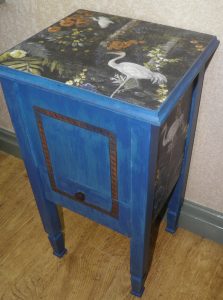
Again, the preferred aesthetic is of personal taste and should work with the character of your room. Shabby chic is very much a part of the vintage scene, and therefore of the vintage zeitgeist.
Shabby chic is also part of the upcycling activity but not all upcycled furniture is shabby chic! Upcycling has also become part of the vintage zeitgeist. Let us now define the vintage zeitgeist.
The Vintage Zeitgeist
Zeitgeist simply means the spirit of the times. It refers to what is popular, or fashionable, at any point in time, past or present. Zeitgeist can refer to designs and styles, including colours and patterns. It can also refer to behaviours in societies and cultures, including the way that we do things or the habits that we form. This is a more general zeitgeist.
The vintage zeitgeist is a part of the general zeitgeist. It exists because many of us are buying and using vintage products and enjoy these activities as part of our lifestyles. Vintage is also a favourable and sustainable way of living.
Above all, vintage offers us choices. Many of us are enjoying creating a unique looking home using vintage inspired décor mixed with authentic vintage pieces of furniture, furnishings, homeware and artwork. In doing so, we are keeping the vintage zeitgeist alive.
The true meaning of vintage for you
And so, interests in vintage are varied depending on aesthetic preferences and on our acceptance of previously owned pieces with unique qualities that add interest to our homes and fit with our personal values. And by buying and using vintage, together we are making a difference to the health of our environment.
In essence, it is your choices, your preferences and your values that help you to create a unique definition of vintage for you and for your home.
Our take home messages are:
- Vintage is here and it’s here to stay!
- Use it, collect it, display it, reimagine it, love it.
And most of all, enjoy being part of the amazingly creative and versatile vintage zeitgeist!